A Customer’s Experience with the Alonea PelvicTool Home & Sport

A Customer’s Experience with the Alonea PelvicTool Home & Sport

During a hospital stay for rehabilitation, a patient with bladder weakness and complex back problems became familiar with the pelvic floor training device PelvicTool by Alonea. In her testimonial, she describes how the combination of visual feedback and individual calibration helped her control her pelvic floor muscles more precisely.

“I got to know the PelvicTool during rehabilitation and had good experiences with it. That’s why I continue to use it at home today.”

Susanne S.

Bladder weakness, pelvic instability, and back pain often occur together—especially when the body has been weakened by illness, prolonged immobilization, or therapies that were not well tolerated. In such situations, it is often difficult to train the pelvic floor in a targeted way without overloading other structures.

A customer—Ms. Susanne S.—shares her personal experience here and describes how, with the pelvic floor trainer PelvicTool from the Swiss medtech company Alonea, she felt for the first time that she could deliberately activate her pelvic floor.

First encounter with the Alonea PelvicTool during rehabilitation

During her rehabilitation at the Kurparkklinik Bad Kissingen, the customer took part in a pelvic floor seminar. In addition to classic group pelvic floor exercises, the Alonea PelvicTool Home & Sport was also presented. It is a non-invasive training device with biofeedback that measures pelvic floor muscle activity and makes it visible via an app. This allows users to see directly on their phone whether—and how strongly—they are contracting or relaxing their pelvic floor muscles.

After an introduction by the physiotherapy team, patients were able to train independently with the device, without fixed appointments.

Ms. S. says: “I took advantage of the offer right away and tried the device. The training was surprisingly engaging—and immediately sparked my competitive spirit.”

She initially found the coordination exercises to be extremely challenging. Instead of a controlled movement, the display initially zigzagged up and down. However, this direct feedback made it clear to her how difficult it was for her to deliberately activate and control the pelvic floor.

Regular training and noticeable progress

Ms. S. then began training regularly two to three times per week with the Alonea PelvicTool.

Over time, she learned to control her pelvic floor muscles more precisely. The exercises could be gradually intensified without causing overload.

These points made the difference for the customer:

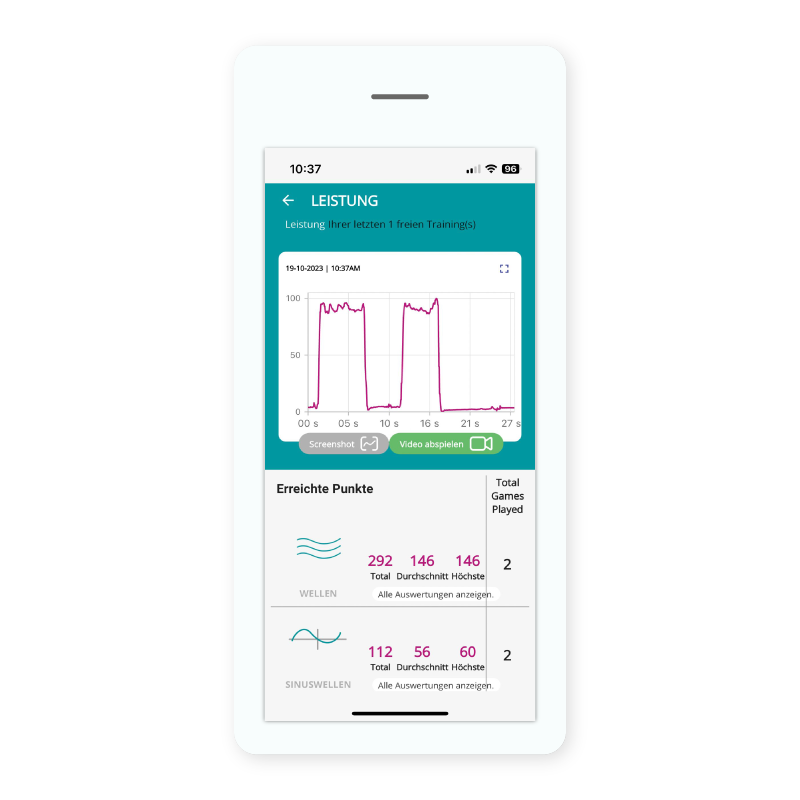
  • The PelvicTool App clearly shows which exercises have been done and how the training is progressing. You can see directly when the pelvic floor is contracted or relaxed again.
  • At the beginning of each training session, the current state is taken into account. The exercises adjust accordingly, so the training is neither too easy nor too strenuous.
  • Training with the pelvic floor trainer is non-invasive, performed fully clothed, and can be easily integrated into everyday life.

Initial situation before rehabilitation

Before rehabilitation, Ms. S. experienced significant muscle loss due to weeks of bed rest and poorly tolerated therapies. A previously latent pelvic floor weakness became noticeably worse. At night, at least one trip to the toilet was necessary, sometimes triggered by an alarm after four hours of sleep. Sleep quality was severely affected.

In addition, there were severe back problems and pronounced pelvic instability. Even small incorrect movements led to visible misalignments.

Situation at the end of the rehabilitation clinic stay

By the end of rehabilitation, Ms. S. showed clear improvements:

  • She was able to sleep through the night again

  • The extreme pelvic instability was no longer an issue

  • Back pain had improved

Return to everyday life

After her stay at the rehabilitation clinic, Ms. S. consistently continued the recommended measures, including equipment-based training twice a week, weekly swimming, physiotherapy with home exercises, Tai Chi Eight Brocades, as well as pelvic floor exercises. However, since the Alonea PelvicTool was not available in her area, pelvic floor training was done exclusively without the device.

Although Ms. S. trained very consistently, there was initially a slow, then drastic deterioration in the stability of her pelvic floor, pelvis, and back over time.

“My physiotherapist explained to me that in many cases the pelvic floor can be well stabilized even without a device. That’s why I performed the demonstrated exercises very diligently. However, for me, this caused my back problems to be triggered again and significantly worsened.

My personal problem is that several areas of discomfort in my body are in a very sensitive balance: Osteoarthritis in the lower lumbar region improves with upright posture, while at the same time, disc problems at L5/S1 are triggered again precisely by this upright posture and excessive pelvic floor tension.”

Pelvic floor training at home – why Ms. S. chose the PelvicTool

Based on her positive experiences during rehabilitation, Ms. S. decided to purchase the PelvicTool Home & Sport privately. This allows her to continue training at home in a way that she had already found well-tolerated and effective during rehab.

Looking back, she says:
“The price is not low for an individual, and in my region the device was not available in physiotherapy practices. For me, however, it was a conscious decision—a personal investment in training that I expect to bring significant benefits.”

Ms. S. sees the key advantage of training with the PelvicTool in the individual calibration at the beginning of each session. Regardless of her condition on a given day, this ensures she always trains within the appropriate intensity range—without overexertion and without irritating her spinal discs.


Pelvic floor training with the PelvicTool from Alonea
Experience with pelvic floor trainers
Pelvic floor trainer PelvicTool Women Men Chair
Pelvic floor trainer PelvicTool Alonea for women
Progress monitoring PelvicTool
Pelvic floor training app
Pelvic floor trainer PelvicTool Women Men Chair

Conclusion

This Alonea PelvicTool experience demonstrates that pelvic floor training does not work the same for everyone. Especially in cases of complex complaints, objective feedback on muscle activity can help make the training safer and more targeted without overexertion.

Conservative treatment of erectile dysfunction and incontinence in cases of pelvic floor weakness

Conservative treatment of erectile dysfunction and incontinence in cases of pelvic floor weakness

The pelvic floor is a complex muscular structure that most men are largely unaware of, and its importance for continence and sexual function is often underestimated. Awareness usually only arises when problems such as incontinence or erectile dysfunction occur. Biofeedback-based training can be an effective way to maintain or restore the functionality of these often neglected structures.


Author: Dr. rer. biol. hum. Ina Schicker, who earned her doctorate in Medical Psychology and has been working as a science and medical journalist since 1996. Her main areas of focus include complementary medicine and geriatrics.

Urinary incontinence remains a highly taboo topic. Among men over 60, nearly one in five is affected, and among those over 80, almost one in three (Kozomara-Hocke, 2016). The primary causes are typically changes in the bladder, prostate, and pelvic floor muscles, although surgeries on the prostate or other areas of the pelvic region can also increase the risk. In most cases, incontinence is associated “with significant physical and psychological impairments as well as reduced quality of life” (Beutel, 2005).

Causes and Types of Continence Disorders

The causes can be varied. Clinically, a distinction is generally made between storage disorders, such as urge incontinence or stress incontinence, and voiding disorders, which include overflow incontinence. Mixed forms may also occur.

In overflow incontinence, small amounts of urine are released only when the bladder is full. This condition can result from myogenic or neurogenic factors, or from an obstruction syndrome due to prostate enlargement. Surgical removal of the prostate for benign prostatic hyperplasia (BPH) or prostate cancer may relieve the obstruction; however, parts of the bladder’s internal sphincter are often removed during surgery, which can impair function. Additionally, the pelvic floor muscles may exhibit altered tension after surgery, potentially leading to erectile dysfunction and voiding difficulties.

Urge incontinence occurs when uncontrollable detrusor contractions lead to urine leakage despite normal sphincter function.

The most common form of urinary incontinence in men — approximately 40–80 percent (Kozomara-Hocke, 2016) — is stress incontinence, where involuntary urine leakage occurs during physical exertion (such as coughing, sneezing, running, or sports). This is usually due to insufficient sphincter control or direct damage or weakening of the pelvic floor muscles.

Conservative Treatment Through Pelvic Floor Training

When contraindications such as organ prolapse or severe nerve damage as the cause of incontinence can be excluded, physiotherapeutic approaches are considered a guideline-recommended first-line option. Multiple meta-analyses show that targeted pelvic floor muscle training provides an accessible and effective way to restore the functionality of impaired or weakened structures. Ideally, this approach can even help avoid surgery altogether, or it can be used prehabilitatively or as part of rehabilitation after a procedure to optimize treatment outcomes. A meta-analysis by Luqiang Zhou et al. (2023) demonstrates that patients who undertake pelvic floor training before a radical prostatectomy experience significantly less involuntary urine loss during the first three months post-surgery compared to patients who did not receive such training.

Importance of Therapeutic Guidance and Targeted Feedback

Positive outcomes are enhanced through careful therapeutic guidance, according to a meta-analysis by Baumann et al. (2022). Without professional instruction and feedback, no benefits were observed compared to control groups that did not receive training.

Since most people have limited experience in perceiving and actively controlling their pelvic floor muscles, biofeedback-based methods offer particularly effective learning opportunities (Hsu et al. 2016). Especially accessible and compliance-friendly are methods that noninvasively measure pelvic floor muscle activity and – like the PelvicTool pelvic floor training device from the Swiss company Alonea – provide users with real-time visual feedback via a simple app. Using a game-like interface, patients can independently follow individualized training programs after thorough instruction by a therapist who defines the specific therapy goals.

“The PelvicTool provides a fun and effective way to train the pelvic floor – and this is precisely what makes it especially appealing for men. Since most men pay less attention to their pelvic floor than women, the visual biofeedback offers valuable support: it increases awareness and makes the topic tangible and accessible. Moreover, it helps break the taboo and encourages open discussion about this important part of the body. Consequently, men are usually highly motivated to train with the PelvicTool.”

Melanie Gähler

Physiotherapist FH / Pelvic Floor Physiotherapist, Physiotherapy Workshop Näfels GL

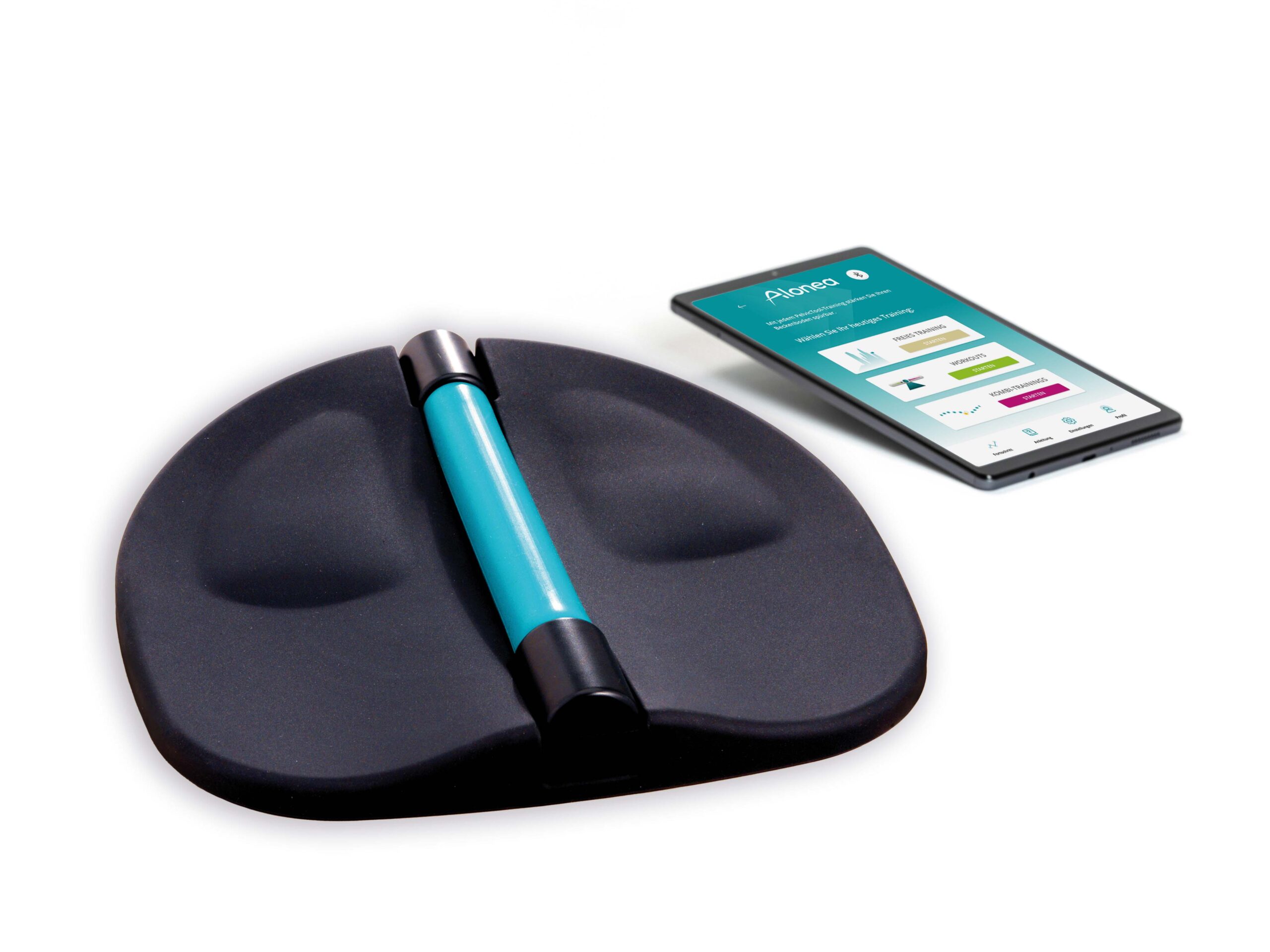
The PelvicTool Home & Sport pelvic floor trainer features an ergonomic seat cushion with a soft sensor tube that highly sensitively detects all movements of the pelvic floor muscles. Under therapeutic supervision, patients complete training programs tailored to their individual needs and can then continue training independently at home. Through digital documentation of their exercises, therapists can monitor the training process and, if necessary, provide corrective guidance or adjust the program to match progress. Sustainable therapeutic outcomes are further supported by integrating the trained muscle activities into everyday movements.

“Although I could no longer feel my pelvic floor muscles after a radical prostatectomy, I learned to control my pelvic floor muscles and alleviate my incontinence symptoms with the help of the PelvicTool. Seeing my progress in the app motivated me to keep going.”

U. Rosendahl Huber

The PelvicTool Home & Sport, developed by the Swiss medical technology company Alonea AG, is available in selected specialist retailers as well as in the Alonea webshop.

Pelvic floor man
Pelvic floor training with the PelvicTool from Alonea
Pelvic floor training app
Conservative treatment of erectile dysfunction and incontinence due to pelvic floor weakness.
Targeted pelvic floor training with the PelvicTool and the app.
The pelvic floor trainer PelvicTool consists of a seat cushion with a sensor tube and an app. The app can be used on both a tablet and a smartphone.

How the PelvicTool Pelvic Floor Trainer from Alonea Works:

References for the Report

Baumann, F. T., Reimer, N., Gockeln, T., Reike, A., Hallek, M., Ricci, C., Zopf, E. M., Schmid, D., Taaffe, D., Newton, R. U., Galvão, D. A., & Leitzmann, M. (2022). Supervised pelvic floor muscle exercise is more effective than unsupervised pelvic floor muscle exercise at improving urinary incontinence in prostate cancer patients following radical prostatectomy: A systematic review and meta-analysis. Disability and Rehabilitation, 44(19), 5374–5385. https://doi.org/10.1080/09638288.2021.1937717

Beutel, M. E., Hessel, A., Schwarz, R., & Brähler, E. (2005). Prävalenz der Urininkontinenz in der deutschen Bevölkerung: Komorbidität, Lebensqualität, Einflussgrößen [Prevalence of urinary incontinence in the German population]. Der Urologe A, 44(3), 232–238. https://doi.org/10.1007/s00120-005-0791-y

Hsu, L. F., Liao, Y. M., Lai, F. C., & Tsai, P. S. (2016). Beneficial effects of biofeedback-assisted pelvic floor muscle training in patients with urinary incontinence after radical prostatectomy: A systematic review and meta-analysis. International Journal of Nursing Studies, 60, 99–111. https://doi.org/10.1016/j.ijnurstu.2016.03.013

Kozomara-Hocke, M., Hermanns, T., & Poyet, C. (2016). Urininkontinenz beim Mann: Ein Tabuthema. Praxis, 105(5), 269–277. https://doi.org/10.1024/1661-8157/a002297

Zhou, L., Chen, Y., Yuan, X., Zeng, L., Zhu, J., & Zheng, J. (2023). Preoperative pelvic floor muscle exercise for continence after radical prostatectomy: A systematic review and meta-analysis. Frontiers in Public Health, 11, 1186067. https://doi.org/10.3389/fpubh.2023.1186067

NEW: PelvicTool pelvic floor training device for rent

NEW: PelvicTool pelvic floor training device for rent


Would you like to try the PelvicTool Home & Sport pelvic floor trainer before purchasing? Some of our distribution partners now offer rental options in addition to sales.

Have you discovered the PelvicTool at a fitness center, with your physiotherapist, urologist, or during a postnatal recovery course and would now like to test it comfortably at home? No problem! You can easily rent the PelvicTool from one of our Alonea distribution partners and try it out before deciding to purchase.


Important: Train your pelvic floor muscles regularly


Pelvic floor therapy Medbase

“To achieve and maintain long-term improvement, pelvic floor training must be integrated into daily life permanently.” Susanne Egli, Physiotherapist, Medbase Winterthur, Brunngasse


If you are considering renting a pelvic floor trainer or purchasing one, it is important to know that the pelvic floor muscles – like any other muscle – must be trained continuously and regularly to achieve long-term results. The PelvicTool supports you optimally by enabling effective and comfortable training. You can easily track your progress via the app. The padded seat and soft sensor tube ensure pain-free training. Just as important: thanks to its ease of use, the PelvicTool can be effortlessly integrated into your daily routine. No changing clothes, no insertion – minimal time required. With just 5 minutes of training, 3 times per week, you can strengthen your pelvic floor muscles.

An investment in health and well-being that pays off – for the whole family!

Pelvic floor trainer rental in Switzerland: Parsenn Produkte AG


Parsenn Produkte AG offers customers two options: you can either rent the PelvicTool Home & Sport for an affordable monthly fee of only *CHF 55.00 (excl. VAT, plus shipping), or purchase the pelvic floor trainer directly via the company’s webshop. The rental offer is available exclusively to customers based in Switzerland.

*Prices subject to change. Please refer to the company’s website for current conditions:

Parsenn Produkte AG, Chlus 13, 7240 Küblis, Tel. 081 300 33 33, parsenn-produkte.ch

Rental in Germany and Austria: Beckenboden-Gesundheit.com


The company Beckenboden-Gesundheit.com specializes in supporting and promoting awareness of pelvic floor health. They offer the Alonea PelvicTool for both purchase and rental. If you decide to purchase later, rental payments will be credited towards the purchase price. The rental offer is available exclusively to customers based in Germany and Austria.

For current conditions, please refer directly to the company’s website:

Beckenboden-Gesundheit.com, Sulzberg, Tel. +49 157 8864 53 79

Pelvic floor training for prostate issues?

Pelvic floor training for prostate issues?

Pelvic floor training has proven to be extremely helpful for prostate problems. Behind the “man’s disease” is the proliferating prostate gland, which hinders urination and causes urinary incontinence. Surgery for prostatic hyperplasia or prostate cancer further aggravates the symptoms. A pelvic floor training device like the
App-supported PelvicTool
strengthens the pelvic floor muscles and often not only relieves incontinence, but also improves sex life and posture.

Men go through menopause too

As with women, men’s hormones ride a roller coaster as they age. The testicles are in the driver’s seat: Their intermediate cells produce fewer sex hormones from the age of 50. Decreasing testosterone levels are manifested by decreased sex drive and enlarged prostate gland.

The prostate represents the largest part of the ejaculate. For this purpose, the walnut-sized organ located in the pelvic floor encloses the urethra, into which it releases its secretion and brings the sperm to life.

Pelvic floor man

What is benign prostatic hyperplasia?

This proximity can become a problem in old age, because the prostate tissue grows hormone-dependent. Less testosterone in the blood makes it proliferate in many men, causing benign prostatic hyperplasia (BPH). The common “man’s disease” narrows the urethra and impairs urination. The first signs of BPH are a nocturnal urge to urinate with incomplete bladder emptying, and later urinary incontinence and urinary retention. Other typical complaints are erectile dysfunction and painful ejaculation with reduced ejaculate quantity.

What to do about benign prostate enlargement?

Man is reluctant to go to the doctor, because the subject is embarrassing to him? He should. The contact person is the urologist who also performs the prostate screening. Early detection is important because minimally invasive surgery is possible with early diagnosis. In transurethral resection of the prostate (TURP), the surgeon inserts an endoscope through the urethra and removes the excess tissue with a wire loop or laser.

How to treat prostate cancer?

Waiting can be fatal, because sometimes BPH becomes malignant and develops into prostate cancer. In the case of complete removal of the prostate (radical prostatectomy, RPE), the surgeon removes the prostate and local metastases from the pelvic floor. The operation is performed classically with an abdominal incision or minimally invasive via a laparoscope inserted through the abdominal wall.

What are the consequences of prostate surgery?

Problematic are interventions on the pelvic floor muscles, sphincter and urethra as well as the peeling or removal of the prostate capsule. The muscles in the pelvic floor hold the bladder and the urinary tract in place, the sphincter is necessary for urine control, and the nerves for erection and ejaculation run in the capsule. Therefore, urinary incontinence and impotence are the most common consequences of prostate surgery.

With urinary incontinence, there are not only problems with urination, but urine is passed involuntarily and/or it “dribbles” after going to the toilet up to continuous urine loss. Such symptoms significantly impair the quality of life, and many sufferers withdraw and avoid social contacts. This can be easily helped for most: A pelvic floor training device alleviates many complaints.

How does a pelvic floor exerciser help after prostate surgery?

The emptying of the bladder is controlled by the ring muscle at the bladder outlet and the
Pelvic floor muscles
. The sphincter muscle opens the bladder, the muscles in the pelvic floor, together with the bladder muscles, push the urine out, and finally the muscle ring closes again. Unlike our skeletal muscles, the smooth muscles involved in this process are not normally subject to voluntary control. But it is possible: everyone does their first pelvic floor training as a baby – at some point, urinary incontinence is a thing of the past, and we go to the potty on our own without diapers. The pelvic floor muscles can also be trained in a similar way by tensing and relaxing them. A great help here is a pelvic floor training device, with which such exercises can be done easily.

Recommended by physiotherapists: PelvicTool for pelvic floor training

Pelvic floor training used to be reserved for rehab and physical therapy, but today anyone can do it at home. The PelvicTool by Alonea is intimate-free and very easy to use via app: Sit on the comfortable seat with normal sports clothes and complete your exercises according to the instructions.

The
corresponding app
visualizes contraction and relaxation of the pelvic floor muscles directly on your smartphone, so you can follow your training live.

Pelvic Floor Physiotherapy medbase, Winterthur: PelvicTool as an aid in rehabilitation

Pelvic Floor Physiotherapy medbase, Winterthur: PelvicTool as an aid in rehabilitation


Use of the «Alonea PelvicTool» pelvic floor trainer in professional pelvic floor physiotherapy.

Through a combination of patient-centered physiotherapy and independent training at home, many pelvic floor disorders can be treated sustainably. The medical health centre of Medbase Winterthur uses the PelvicTool Home & Sport to support the pelvic floor rehabilitation of its patients.

Susanne Egli has specialized in pelvic floor rehabilitation for over twenty years and brings her extensive knowledge to the Medbase practice at Brunngasse 6 in Winterthur. After a thorough examination and assessment, she also uses the PelvicTool Home & Sport pelvic floor trainer in her daily practice, which successfully helps patients to train independently at home.

As a physiotherapist, after the birth of her two children and the resulting changes in her own body, Ms Egli became interested in the hidden muscles. The personal and intimate nature of her work, combined with the very different types of ailments, is exactly the kind of exciting challenge that she enjoys so much about her profession.

Pelvic floor – a taboo subject?

Although urinary incontinence is now openly discussed in many places, not all problems related to weakness or overstretching of the pelvic floor muscles are taboo. These include impaired bowel function, prolapse, pain during sexual intercourse or general pain in the bladder, vagina and rectum, which are in close proximity to the pelvic floor.

Pelvic floor physiotherapy

“An overactive pelvic floor muscle is also not uncommon and should be treated with specific relaxation exercises”. Susanne Egli, physiotherapist, Medbase Winterthur, Brunngasse

Pelvic floor problems can affect all age groups, although the risk of incontinence problems in women increases with age. Working with children and teenagers requires additional specialisation in pelvic floor physiotherapy. Men are also affected by the problem, especially after prostate surgery. As a result, many patients lose self-confidence and reduce their mobility to the point of isolation, as even a simple trip into town can become a psychological burden.

Professional support for lasting treatment success

This makes it all the more important to put yourself in the hands of a professional for a thorough assessment. Susanne Egli will first carry out a vaginal or anal examination to determine whether and to what extent there is under- or over-activity and whether the person concerned is able to control the pelvic floor muscles selectively at all.

Susanne Egli points out: “About one third of those affected cannot feel exactly where the pelvic floor is and are therefore unable to contract and relax it or even compensate for movement by activating other muscle groups.”

In the case of devices with pressure sensors, this can lead to patients receiving positive feedback on their training even though it is triggered by the wrong muscle groups. For Susanne Egli, it is therefore very important to work with patients over a number of physiotherapy sessions to develop the ability to contract muscles correctly. However, once this awareness has been developed, regular training at home can reduce symptoms and, in the long term, significantly improve quality of life within a few weeks.

“Our aim is to sensitise patients over the course of several sessions to the training and use of the pelvic floor muscles in everyday life and then to release them into independence,” says Susanne Egli.

Pelvic Floor Physiotherapy Device PelvicTool Alonea

Neuromuscular training with biofeedback

The Alonea PelvicTool is ideal for working with patients for a number of reasons, as the pelvic floor therapist explains: “As no sensor needs to be inserted into the body, patients need to exert very little effort, so the device can be used without much effort in everyday practice, even for shorter training sessions. “The PelvicTool consists of the training app and a seat cushion with a sensor tube in the middle, on which the patient sits in light training clothes. In biofeedback training, the contraction and relaxation of the pelvic floor muscles is measured by sensors and visualised in the PelvicTool app. This makes it possible to check in real time on the smartphone or tablet during the therapy session whether the patient is exercising at the right level. Individual settings for the training programmes are also possible, as is guided or free training.

The Alonea PelvicTool provides targeted training, whether you are treating pelvic floor weakness or excessive tension. Its ease of use makes it ideal for lending to patients: It is easy to use and motivates patients to train independently with short, varied training sessions with progress monitoring.

Because, says pelvic floor physiotherapist Susanne Egli: “In order to achieve and maintain long-term improvement, pelvic floor training must be integrated into everyday life forever.”

Medbase Winterthur Brunngasse

Brunngasse 6

8400 Winterthur

Tel. +41 52 260 37 80
winterthur-brunngasse@medbase.ch

www.medbase.ch