



During a hospital stay for rehabilitation, a patient with bladder weakness and complex back problems became familiar with the pelvic floor training device PelvicTool by Alonea. In her testimonial, she describes how the combination of visual feedback and individual calibration helped her control her pelvic floor muscles more precisely.
“I got to know the PelvicTool during rehabilitation and had good experiences with it. That’s why I continue to use it at home today.”
Bladder weakness, pelvic instability, and back pain often occur together—especially when the body has been weakened by illness, prolonged immobilization, or therapies that were not well tolerated. In such situations, it is often difficult to train the pelvic floor in a targeted way without overloading other structures.
A customer—Ms. Susanne S.—shares her personal experience here and describes how, with the pelvic floor trainer PelvicTool from the Swiss medtech company Alonea, she felt for the first time that she could deliberately activate her pelvic floor.
First encounter with the Alonea PelvicTool during rehabilitation
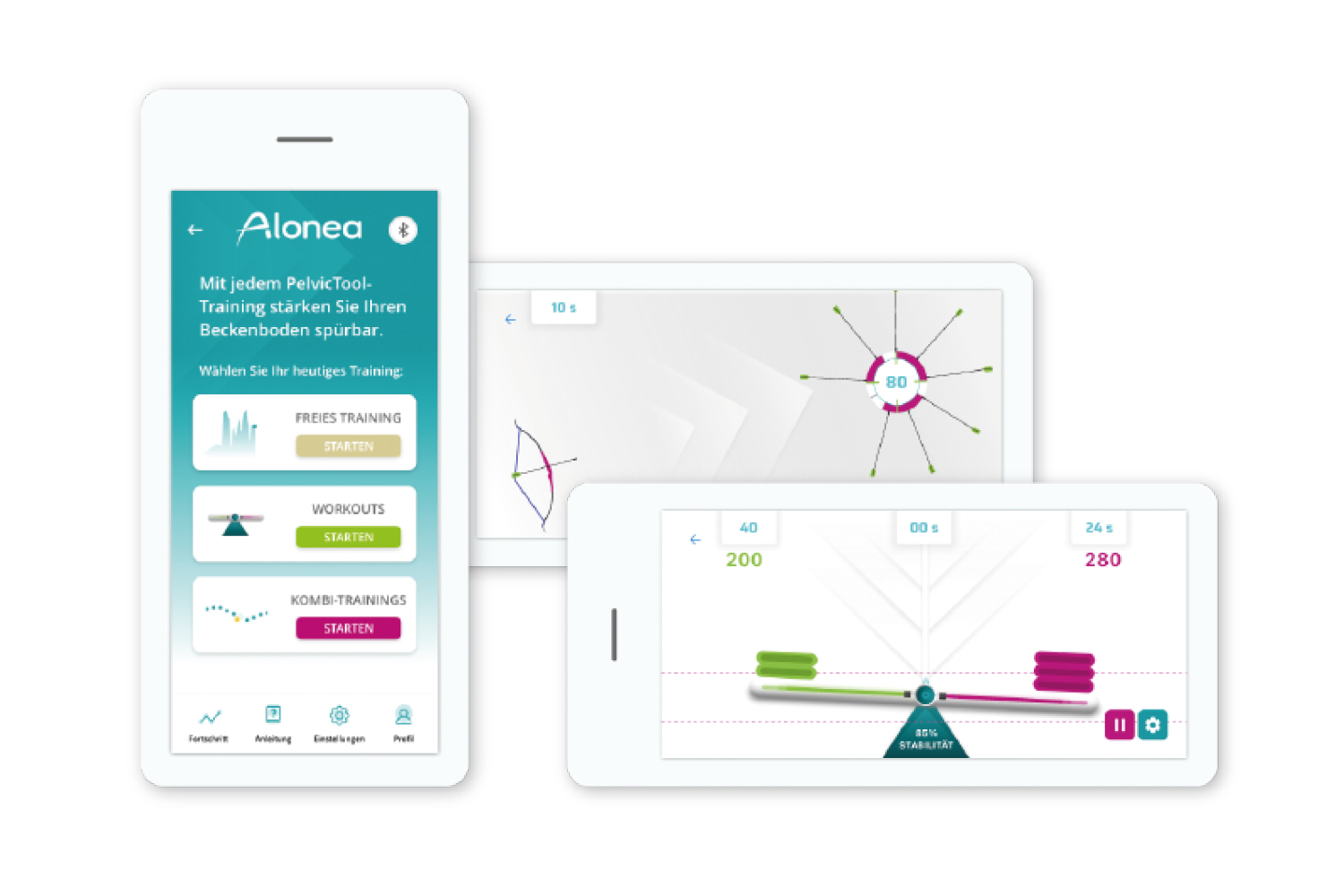
During her rehabilitation at the Kurparkklinik Bad Kissingen, the customer took part in a pelvic floor seminar. In addition to classic group pelvic floor exercises, the Alonea PelvicTool Home & Sport was also presented. It is a non-invasive training device with biofeedback that measures pelvic floor muscle activity and makes it visible via an app. This allows users to see directly on their phone whether—and how strongly—they are contracting or relaxing their pelvic floor muscles.
After an introduction by the physiotherapy team, patients were able to train independently with the device, without fixed appointments.
Ms. S. says: “I took advantage of the offer right away and tried the device. The training was surprisingly engaging—and immediately sparked my competitive spirit.”
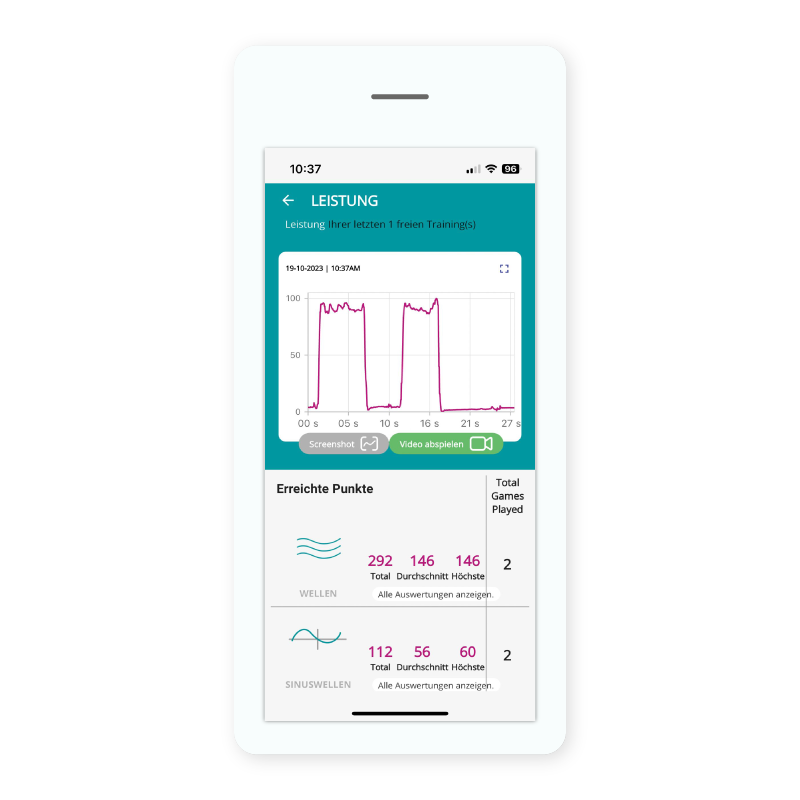
She initially found the coordination exercises to be extremely challenging. Instead of a controlled movement, the display initially zigzagged up and down. However, this direct feedback made it clear to her how difficult it was for her to deliberately activate and control the pelvic floor.
Regular training and noticeable progress
Ms. S. then began training regularly two to three times per week with the Alonea PelvicTool.
Over time, she learned to control her pelvic floor muscles more precisely. The exercises could be gradually intensified without causing overload.
These points made the difference for the customer:
- The PelvicTool App clearly shows which exercises have been done and how the training is progressing. You can see directly when the pelvic floor is contracted or relaxed again.
- At the beginning of each training session, the current state is taken into account. The exercises adjust accordingly, so the training is neither too easy nor too strenuous.
- Training with the pelvic floor trainer is non-invasive, performed fully clothed, and can be easily integrated into everyday life.
Initial situation before rehabilitation
Before rehabilitation, Ms. S. experienced significant muscle loss due to weeks of bed rest and poorly tolerated therapies. A previously latent pelvic floor weakness became noticeably worse. At night, at least one trip to the toilet was necessary, sometimes triggered by an alarm after four hours of sleep. Sleep quality was severely affected.
In addition, there were severe back problems and pronounced pelvic instability. Even small incorrect movements led to visible misalignments.
Situation at the end of the rehabilitation clinic stay
By the end of rehabilitation, Ms. S. showed clear improvements:
-
She was able to sleep through the night again
-
The extreme pelvic instability was no longer an issue
-
Back pain had improved
Return to everyday life
After her stay at the rehabilitation clinic, Ms. S. consistently continued the recommended measures, including equipment-based training twice a week, weekly swimming, physiotherapy with home exercises, Tai Chi Eight Brocades, as well as pelvic floor exercises. However, since the Alonea PelvicTool was not available in her area, pelvic floor training was done exclusively without the device.
Although Ms. S. trained very consistently, there was initially a slow, then drastic deterioration in the stability of her pelvic floor, pelvis, and back over time.
“My physiotherapist explained to me that in many cases the pelvic floor can be well stabilized even without a device. That’s why I performed the demonstrated exercises very diligently. However, for me, this caused my back problems to be triggered again and significantly worsened.
My personal problem is that several areas of discomfort in my body are in a very sensitive balance: Osteoarthritis in the lower lumbar region improves with upright posture, while at the same time, disc problems at L5/S1 are triggered again precisely by this upright posture and excessive pelvic floor tension.”
Pelvic floor training at home – why Ms. S. chose the PelvicTool
Based on her positive experiences during rehabilitation, Ms. S. decided to purchase the PelvicTool Home & Sport privately. This allows her to continue training at home in a way that she had already found well-tolerated and effective during rehab.
Looking back, she says:
“The price is not low for an individual, and in my region the device was not available in physiotherapy practices. For me, however, it was a conscious decision—a personal investment in training that I expect to bring significant benefits.”
Ms. S. sees the key advantage of training with the PelvicTool in the individual calibration at the beginning of each session. Regardless of her condition on a given day, this ensures she always trains within the appropriate intensity range—without overexertion and without irritating her spinal discs.



Conclusion
This Alonea PelvicTool experience demonstrates that pelvic floor training does not work the same for everyone. Especially in cases of complex complaints, objective feedback on muscle activity can help make the training safer and more targeted without overexertion.