Jul 19, 2026 | Uncategorized
Social withdrawal and massive impairment of quality of life are often the sad consequences of urinary incontinence. Many patients with uncontrollable urine leakage no longer dare to talk to people, and the topic is also unpleasant for doctors. Yet in many cases the discomfort of urination can be alleviated with a pelvic floor training device, because the pelvic floor plays an important role in many forms of bladder weakness.
What is urinary incontinence?
Urinary incontinence is defined as the inability to control the time and place of urination. What we take for granted from childhood becomes increasingly difficult or impossible with age and various diseases. The forms of bladder weakness range from a slight dribble during physical exertion or sneezing to a complete loss of control over the sphincter muscle.
How common is bladder weakness?
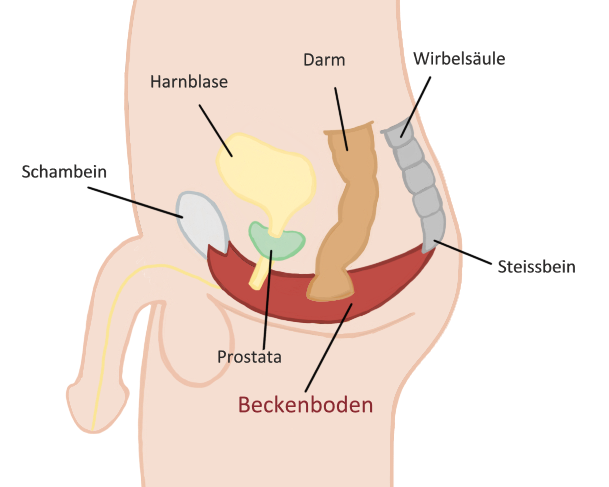
Predominant causes of urinary incontinence are age-related changes in the pelvic floor muscles and urogenital tract. In women, the percentage increases with age and number of births; the average is 6-10 percent. Older men often suffer from prostate enlargement (benign prostatic hyperplasia, BPH): while urinary incontinence still occurs in 11 percent of those aged 45-65, the figure is already 32 percent in those over 80.
What forms of urinary incontinence are there?
Doctors distinguish between several types of urinary incontinence, depending on the symptoms and causes. The most important of these are explained below.
Stress incontinence occurs with even the slightest physical exertion: Walking, lifting, sneezing, coughing, laughing. Men and women suffer equally from this form of urinary incontinence. In the former, prostate enlargement and prostate surgery are the main causes, while women often suffer from weakened pelvic floor muscles after the strain of childbirth and hormonal changes after menopause. The outdated and inaccurate term stress incontinence is hardly ever used in professional circles.
Attention hold-up! If you suddenly feel an irrepressible urge to urinate from one moment to the next, this is called urge incontinence. Bladder infections are the most common reason in women, especially since they occur particularly frequently thanks to the short urethra. In both sexes, unstable bladder muscles, neurological diseases or bladder tumors can also be responsible for urge incontinence.
Mixed incontinence is when a combination of urge incontinence and stress incontinence is present. It is particularly common in men who have undergone prostate surgery, which affects the urethra and sphincter. As with pure urge incontinence, a diagnostic clarification of the cause is absolutely necessary.
In overflow continence urine automatically passes when the bladder is full, without the patient having any influence over it. The most common causes are weak bladder or pelvic floor muscles or a blockage of the urethra. In older men, this is mainly due to prostate enlargement. Otherwise, nerve damage due to diabetes affects the muscles, or tumors, strictures and bladder stones block the urinary tract.
Extraurethral means outside the urethra, extraurethral incontinence means that urine drains through unanticipated pathways. Causes include congenital defects of the urethra or ureter that manifest in childhood, or secondary damage, such as the formation of fistulas between the bladder or ureter and the bowel or vagina. Such detours can only be corrected by surgery; pelvic floor training can only support rehab.
In reflex incontinence, nerve impulses trigger reflex emptying of the urinary bladder. The patient cannot control this process, often the patient is not even aware of the urge to urinate. The injury to the nerve pathways involved is located in the spinal cord (spinal reflex incontinence; spina = spinal cord) or in the brain (supraspinal reflex incontinence; supraspinal = above the spinal cord). The most common causes of spinal reflex incontinence are spinal cord injuries, paraplegia and multiple sclerosis; for supraspinal reflex incontinence, dementia, Parkinson’s disease and stroke. Pelvic floor training reaches its limits here; an indwelling catheter or bladder pacemaker are used instead.
Pelvic floor training has proven effective for the most common forms of urinary incontinence: stress incontinence, stress incontinence and their mixed forms. These account for over 90 percent of cases of bladder weakness. A special pelvic floor training device makes daily exercises easier.
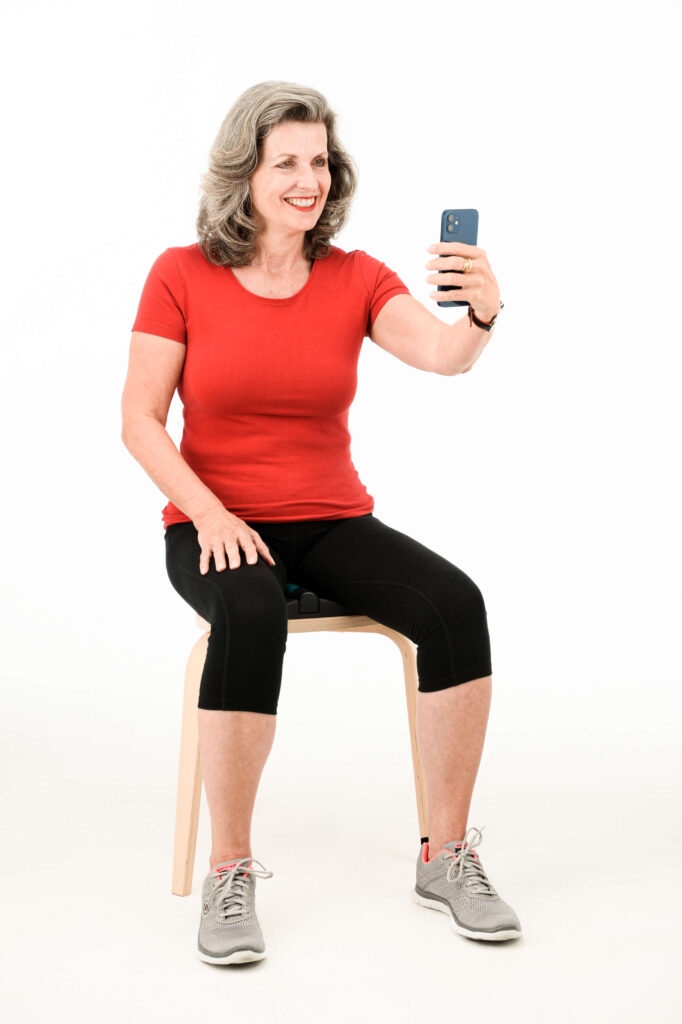
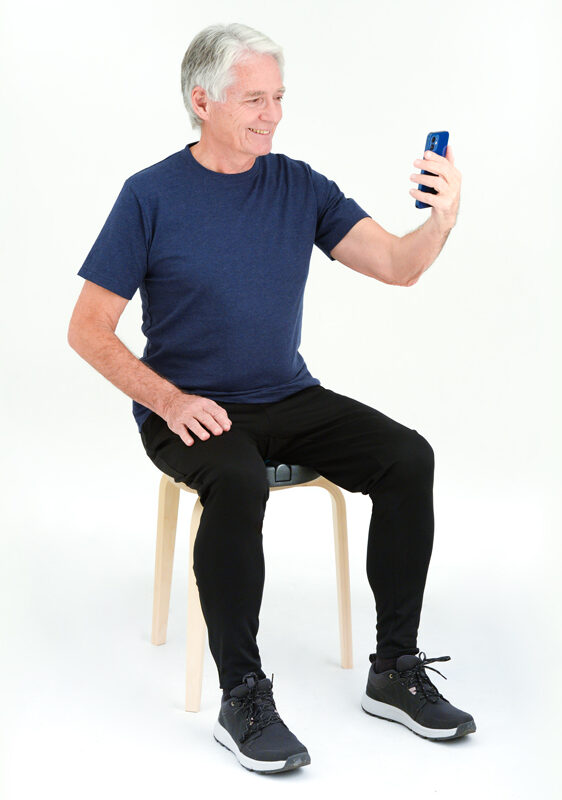
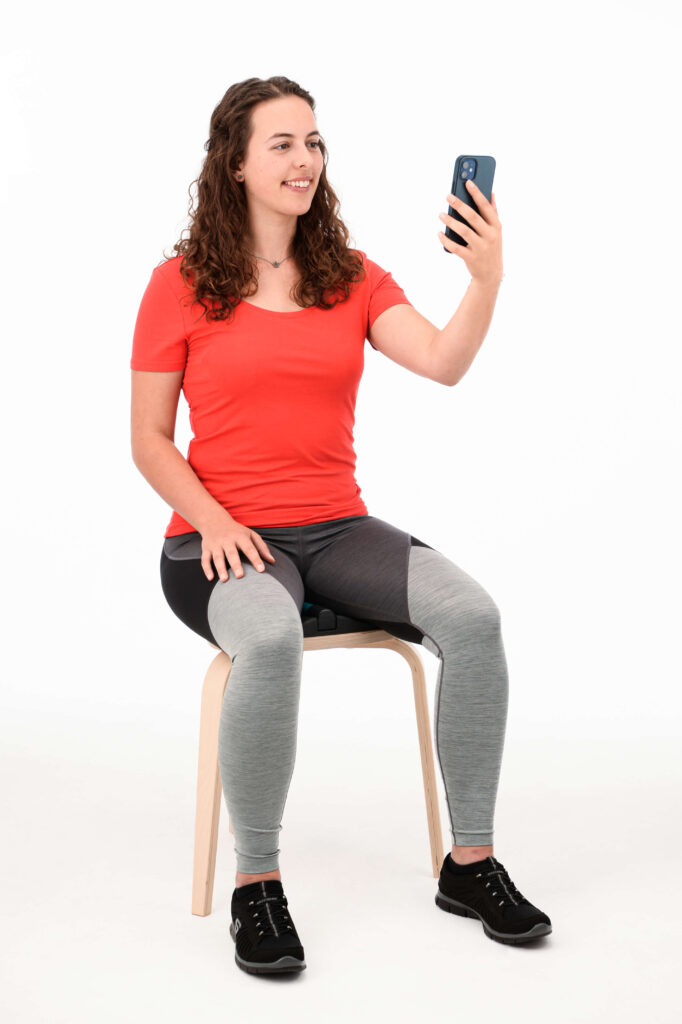
Modern pelvic floor trainers such as the PelvicTool from Alonea are considered particularly innovative. Sit on the device in normal sportswear and track your workout on your cell phone or tablet with the accompanying app. The highly sensitive sensors show which muscles you are currently tensing – there’s no better way to visualize your exercise success. Finally being able to exercise again when you really want to secures a greater deal of quality of life.

Sep 14, 2025 | Uncategorized
Pelvic floor training is only for women? Far from it. Men also benefit from this. Both sexes it helps with urinary and fecal incontinence. Women need strong pelvic floor muscles because of childbirth, and for men, a
Pelvic floor training device
relieves symptoms of prostate enlargement and erectile dysfunction. And can often even be used preventively.
Men also benefit from pelvic floor training
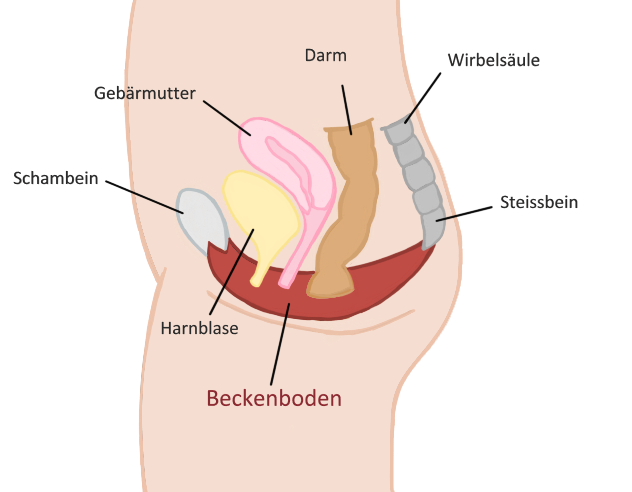
Pelvic floor training used to be reserved for women. Her vagina, along with the urinary tract and intestines, creates a weak spot in the
Pelvic floor muscles
. A strong pelvic floor improves resilience during pregnancy and helps normal anatomy return after birth.
For men, the topic of pelvic floor training is a taboo subject. Yet many of their typical ailments can be improved with a modern pelvic floor training device.
In men, overweight, prolonged sitting and poor posture cause weakened pelvic floor muscles. In old age, prostate problems are added, which are accompanied by urinary incontinence. The latter, just like fecal incontinence, also affects women, in this case due to pregnancy.
In sexuality, the pelvic floor muscles play an important role. Strengthened, it provides high sensitivity in men and women, and in men it is essential for potency.
Why is a stable pelvic floor important for men and women?
Anatomically, walking upright is a problem. Whereas the abdominal cavity of our four-legged ancestors hung resiliently on the horizontally running spinal column, our fat reserves and unborn offspring strain the pelvic floor. The lumbar vertebrae are also exposed to particular stresses due to the upright position: widespread back pain.
The abdominal cavity is bounded on all sides: Above by the diaphragm, in front by the abdominal muscles, behind the spine and below the pelvis provides bony support. In the back, the back muscles are critical; in the pelvis, the pelvic floor muscles are critical: both must absorb the load that was previously held by the abdominal muscles. Just like the back muscles, the muscles in the pelvic floor are important for the stability of the trunk and thus for posture, physical performance, breathing, digestion, continence and, last but not least, sexuality.
Positive effects: What are the benefits of pelvic floor training for men?
Pelvic floor training is the order of the day for men who have problems with their continence and/or potency. Men suffer from urinary and faecal incontinence much less often in their younger years than women with their pregnancies, but they catch up strongly in old age. Then erectile dysfunction also becomes more frequent. Causes of such complaints are
- neurological diseases such as Alzheimer’s, Parkinson’s and multiple sclerosis (MS), which disrupt the retention of stool and urine;
- benign enlargement of the prostate, which mainly affects urinary continence and potency. Operations on the prostate, especially in the case of prostate cancer, further impair the functional capacity of the pelvic floor muscles.
The cross of men with the prostate
Male disease ben ignprostatic hyperplasia: Benign prostatic hyperplasia (BPH) affects urinary incontinence and sex life and, to make matters worse, can develop into prostate cancer. The numbers are staggering:
- Prostate hyperplasia occurs in men over 60 with an incidence of 50-60 percent, beyond 70 with 80-90 percent.
- Erectile dysfunction occurs in 52 percent of all men between the ages of 40 and 70, according to the U.S. Massachusetts Male Ageing Study (MMAS).
- Potency problems in old age are confirmed by the European Male Ageing Study (EMAS), which found that 6-64 percent of men aged 40-79 struggle with it.
Why are prostate and pelvic floor muscles important for urinary control and potency?
Healthy pelvic floor muscles are essential for blood flow to the penis, which is the only way to build and maintain an erection. In addition, all the nerves to control erection and ejaculation run here. A trained pelvic floor therefore also means improved sensitivity, better control over the ejaculatory reflex and therefore more intensive, better and longer sex.
Again, the prostate is the weak point: the gland that produces the bulk of the sperm and brings the sperm to life surrounds the urethra. Prostate enlargement and prostate surgery ultimately lead to urinary incontinence. Surgery often exacerbates potency problems as well: The nerves supplying the penis run through the capsule of the prostate and are affected by the surgery.
How can the PelvicTool help men with incontinence and impotence?
The PelvicTool is also suitable for prevention and prophylaxis.
Pelvic floor training
provides improved blood circulation and control of the nerves running in the pelvic floor muscles – important for urine control and potency.
A practical side effect is that it also optimises posture. If the corresponding nerves remain intact after prostate surgery, in many cases their functionality can be at least partially restored with pelvic floor training. Improvement of erectile dysfunction and control over ejaculation improve sexual life, not least through increased self-confidence.
Sources, links and further literature
- Dorey G.
Male pelvic floor: history and update
. Urol Nurs. 2005 Aug;25(4):277-84. PMID: 16225345.
- Yafi FA, Jenkins L, Albersen M, Corona G, Isidori AM, Goldfarb S, Maggi M, Nelson CJ, Parish S, Salonia A, Tan R, Mulhall JP, Hellstrom WJ.
Erectile dysfunction
. Nat Rev Dis Primers. 2016 Feb 4;2:16003. doi: 10.1038/nrdp.2016.3. PMID: 27188339; PMCID: PMC5027992.
- Ng M, Baradhi KM.
Benign Prostatic Hyperplasia
. 2021 Aug 11. In: StatPearls [Internet]. Treasure Island (FL): StatPearls Publishing; 2021 Jan-. PMID: 32644346.
- Strączyńska A, Weber-Rajek M, Strojek K, Piekorz Z, Styczyńska H, Goch A, Radzimińska A.
The Impact Of Pelvic Floor Muscle Training On Urinary Incontinence In Men After Radical Prostatectomy (RP) – A Systematic Review
. Clin Interv Aging. 2019 Nov 12;14:1997-2005. doi: 10.2147/CIA.S228222. PMID: 31814714; PMCID: PMC6858802.

Oct 17, 2024 | Slider HP EN
Sport is indispensable for a healthy lifestyle – but the fact that it can cause incontinence is considered a taboo subject. Not only women and older people are affected by this, young athletes of both sexes have to struggle with it as well. Urinary incontinence in particular occurs in many sports and not only affects performance but also daily life. Suitable pelvic floor training with a modern pelvic floor training device provides relief, prevents incipient incontinence and improves the quality of life.
Taboo subject of urinary incontinence in female athletes
Urinary incontinence is only an issue for women after childbirth or menopause? Far from it. Sports medicine experts have found that uncontrolled urination due to exercise is more common than is commonly thought. Studies show that the female gender in particular struggles with stress incontinence (formerly known as stress incontinence) in many sports. The figures are quite alarming: in middle-aged women, urinary incontinence occurs with a frequency of 30%, with regular sporting activity it rises to over %, , and in old age the figures go blithely upwards still further.
Women suffer particularly often from incontinence
Women are significantly more likely than men to suffer from incontinence. This is mainly due to pregnancies in which the unborn baby puts increasing weight on the inner lining of the pelvic floor. In particular, vaginal births and increasing age weaken the pelvic floor muscles, which are important for controlling bowel movements and urination.
Althoughsport is healthy, it is often an additional trigger for urinary incontinence and also faecal incontinence. Likewise, contraceptives, smoking and obesity have a negative effect on the stability of the pelvic floor.
Why is a well-trained pelvic floor so important?
The pelvic floor forms the natural closure of the abdominal cavity at the bottom, while it is bounded at the top by the diaphragm, at the front and sides by the abdominal muscles and at the back by the spine. Unlike a six-pack, you can’t see it – probably one of the reasons people don’t put as much emphasis on pelvic floor training.
The pelvic floor muscles are not only important for a straight posture (which plays a major role in sports), but also for the functionality of the urinary bladder and rectum, in women the vagina, in men the prostate. Impairments lead to urinary incontinence, fecal incontinence, and decreased sensation during sex.
Why does sport put strain on the pelvic floor muscles?
The upright gait was not intended in evolution. Hands free leads to the fact that our abdominal viscera with their entire weight on the lumbar spine and pelvic floor and thus on the pelvic floor muscles. The result is civilization diseases such as back problems and incontinence. Exercise can further aggravate these symptoms. How come?
- Jerky movements are normal in many sports. Jumping around and stopping quickly greatly increase the mechanical stress and muscle stretch in the pelvis.
- The abdominal press comes with many sports activities. This refers to the tightening of the abdominal muscles and diaphragm, which further increases the pressure on the abdominal organs and thus also on the pelvic floor.
- We run wrong, at least from a functional-anatomical point of view: in evolution, humans have evolved to be rushers who can run for hours. However, springy on toes and balls and not like us on the little elastic mounted heel, which passes every shock unfiltered to the body.
- Constant stress on the pelvic floor muscles stretches and weakens them. This affects the ability of the rectum and especially the bladder muscle to close, leading to urinary and/or fecal incontinence.
Competitive sports aggravate the symptoms of urinary incontinence
Urinary incontinence is particularly high among women in competitive sports. Across all sports, metastudies found an average incidence of 25.9% %, of which 20.7% proved to be stress incontinence. Extremely high scores were recorded for volleyball (75.6%) and trampolining (80%).
A prevalence of 5.6 % is assumed for even light sporting activity. Swimming corresponds most closely to our former four-legged natural posture and puts the least strain on the pelvic floor muscles.
The impairment of the pelvic floor varies depending on the type of sport:
- low load: golf, swimming, running, throwing the discus and javelin.
- moderate load: cross-country skiing, hockey, tennis, badminton, baseball
- heavy load: gymnastics, ballet, aerobics, trampolining, judo, football, basketball, handball, volleyball
Not to be forgotten: Most studies deal with active female athletes, i.e. those of young and middle age. The incidence of urinary incontinence increases significantly with age – with or without exercise.
What about urinary incontinence in male athletes and fecal incontinence?
Thereare hardly any studies on sports-related incontinence in men – currently there are just about a dozen. At the very least, they show that urinary incontinence is not an exclusive problem for female athletes and is probably an even greater taboo for male athletes.
Findings are even more sparse in fecal incontinence – here there are only episodic reports. Since the weakening of the pelvic floor musculature also impairs the holding mechanisms of the intestine, the number of unreported cases is probably higher than the meagre reports suggest.
How common is urinary incontinence in sports?
Urinary incontinence is more common among athletes than you might think. A few numbers:
- Female competitive athletes are about five times more likely to suffer from urinary incontinence than their male counterparts. One of these studies talks about 45.1% of women, but only 14.7% of men.
- Stress incontinence accounts for 59.9% of cases.
- Moderate to severe are 30.9% of the cases of urinary incontinence.
- Of the test subjects report urinary leakage
- 22.7 % during training
- 40.5 % for jumping
- 19.6 % when running
- 20.2 % for other activities
Remedy for sports-related incontinence: pelvic floor training
Especially in competitive sports, pelvic floor training is considered the best option for treating urinary incontinence. A strengthened and well trained pelvic floor musculature not only improves current complaints with incontinence, but also prevents age-related aggravations. Likewise, the exercises have proven themselves in less strenuous sports.
With a modern pelvic floor training device like the PelvicTool from Alonea, training is easier than ever before: You can sit on the device in loose sportswear and follow the tightening and loosening of the muscles in the pelvic floor live via an app on your smartphone or tablet. The intimate-free application even allows training in groups, for example in physiotherapy – sport is always more fun together than alone, and this also applies to pelvic floor training!
Sources, links and further literature
- Bø K.
Urinary incontinence, pelvic floor dysfunction, exercise and sport.
Sports Med. 2004;34(7):451-64. doi: 10.2165/00007256-200434070-00004. PMID: 15233598.
- Carvalhais A, Araújo J, Jorge RN, Bø K.
Urinary incontinence and disordered eating in female elite athletes.
J Sci Med Sport. 2019; 22: 140-144. doi:10.1016/j.jsams.2018.07.008
- de Mattos Lourenco TR, Matsuoka PK, Baracat EC, Haddad JM. Urinary incontinence in female athletes: a systematic review. Int Urogynecol J. 2018 Dec;29(12):1757-1763. doi: 10.1007/s00192-018-3629-z. Epub 2018 Mar 19. PMID: 29552736.
- Dobbertin Gram MC, Bø K. High level rhythmic gymnasts and urinary incontinence: Prevalence, risk factors, and influence on performance. Scand J Med Sci Sports. 2019; 00: 1-7. doi:10.1111/sms.13548
- Goldstick O, Constantini N.
Urinary incontinence in physically active women and female athletes.
Br J Sports Med. 2014 Feb;48(4):296-8. doi: 10.1136/bjsports-2012-091880. Epub 2013 May 18. PMID: 23687004.
- Louis-Charles K, Biggie K, Wolfinbarger A, Wilcox B, Kienstra CM. Pelvic Floor Dysfunction in the Female Athlete. Curr Sports Med Rep. 2019 Feb;18(2):49-52. doi: 10.1249/JSR.0000000000000563. PMID: 30730341.
- Nygaard IE, Shaw JM. Physical activity and the pelvic floor. Am J Obstet Gynecol. 2016 Feb;214(2):164-171. doi: 10.1016/j.ajog.2015.08.067. Epub 2015 Sep 6. PMID: 26348380; PMCID: PMC4744534.
- Pires T, Pires P, Moreira H, Viana R.
Prevalence of Urinary Incontinence in High-Impact Sport Athletes: A Systematic Review and Meta-Analysis.
J Hum Kinet. 2020 Jul 21;73:279-288. doi: 10.2478/hukin-2020-0008. PMID: 32774559; PMCID: PMC7386138.
- Rodríguez-López ES, Calvo-Moreno SO, Basas-García Á, Gutierrez-Ortega F, Guodemar-Pérez J, Acevedo-Gómez MB. Prevalence of urinary incontinence among elite athletes of both sexes. J Sci Med Sport. 2021 Apr;24(4):338-344. doi: 10.1016/j.jsams.2020.09.017. Epub 2020 Oct 1. PMID: 33041208.
- Sorrigueta-Hernández A, Padilla-Fernandez BY, Marquez-Sanchez MT, Flores-Fraile MC, Flores-Fraile J, Moreno-Pascual C, Lorenzo-Gomez A, Garcia-Cenador MB, Lorenzo-Gomez MF. Benefits of Physiotherapy on Urinary Incontinence in High-Performance Female Athletes. Meta-Analysis. J Clin Med. 2020 Oct 10;9(10):3240. doi: 10.3390/jcm9103240. PMID: 33050442; PMCID: PMC7601720.

Dec 31, 2021 | health insurance
The health insurance provider CSS has added additional outpatient services to its supplementary insurance coverage. Since January 2022, new services in the areas of health promotion, prevention and treatment have been made available to insured persons. We are pleased that the «PelvicTool» by Alonea AG is supported by CSS with a cost contribution for pelvic floor training.
CSS list of aids (VVG) PDF. Alonea is listed under «Pelvic floor training tools (digital)» and is not mentioned by name. Subject to change.
How to apply for cost contribution for CSS insured persons with supplementary insurance
- Please first check with CSS whether you have supplementary insurance that entitles you to a cost contribution when purchasing a PelvicTool pelvic floor trainer.
- Order the PelvicTool in our webshop: PelvicTool Home & Sport pelvic floor trainer. As a CSS insured customer, you benefit via the CSS-enjoy365 shop from a *20% discount on the retail price of the PelvicTool Home & Sport from 01.01.2026 to 31.12.2026. Enter the voucher code «CSS_PELVICTOOL_20%» in the Alonea shop on the page «Check your cart» in the field «CODE» and then click the turquoise button «APPLY DISCOUNT CODE». You will then see that the 20% discount has been deducted from the total amount. Proceed by clicking «CHECKOUT». Enter your delivery address details. In the field «Comments», please note your CSS customer number. Then review your order, select the payment method and click «PLACE ORDER WITH OBLIGATION TO PAY».
- The PelvicTool will be delivered to your home.
- The package includes the invoice from Alonea AG. You do not need to pay this invoice again, as you have already paid for the product in the webshop. Please submit this invoice to CSS for reimbursement.
*Terms of use: The 20% CSS-enjoy365 discount on the retail price of the PelvicTool Home & Sport is redeemable exclusively in the Alonea AG webshop, valid from 01.01.–31.12.2026, and cannot be combined with other discounts or promotions.