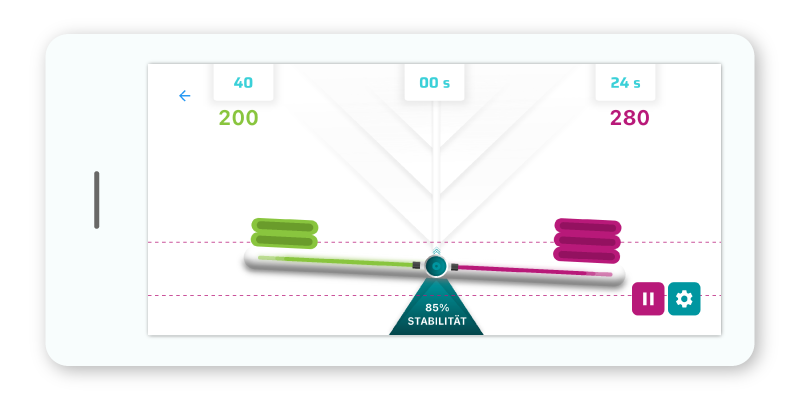
The PelvicTool by Alonea uses a highly sensitive biofeedback sensor that not only registers pelvic floor contractions but also other movements of the body – e.g. breathing, changes in posture, or pressure caused by weight shifts. This becomes particularly visible in exercises such as the “Stability Exercise” (= exercise with the scale symbol, see PelvicTool app), since the sensor includes every change in sitting position or upper body movement. This is due to the fact that the pelvic floor is functionally connected to many other muscle groups and nerve pathways. A completely isolated activation of the pelvic floor muscles is hardly possible – even small movements of the upper body, legs, or breathing influence the measurement.
These apparent “disturbances” are physiologically completely normal. By maintaining an upright, calm sitting posture and practising regularly with the real-time biofeedback, they can be reduced effectively. Your training addresses exactly this: through targeted repetitions and conscious awareness, you strengthen your control over the pelvic floor muscles – in interaction with the whole body.
Important: Even if the display is influenced by other movements, the training effect remains. Your pelvic floor muscles are still activated and trained – what matters is the regular practice.
Tips for optimising your exercise:
-
Adjust the calibration: In the game settings, you can reduce the maximum force (e.g. from 80% to 60%). This lowers the required effort – making it easier to get started.
-
Be patient: Especially with the Stability Exercise, it is worth training calmly and with sensitivity. It is one of the more demanding exercises, but it delivers long-term results.
-
Pay attention to your posture: A stable, calm sitting position improves measurement accuracy. With time, you will find it easier to recognise and deliberately regulate movement influences.